Ebook Download Half of a Yellow Sun, by Chimamanda Ngozi Adichie
Checking out comes to be more significance and also significance in the life cultures. It tends to be more complicated. Every facet that undergoes the life will entail analysis. Reviewing can be reviewing everything. In the means, market, collection, book shop, web resources, many will show you benefits when reading. Nevertheless, it's more finished when publication can be your favourite term to check out. We will certainly share Half Of A Yellow Sun, By Chimamanda Ngozi Adichie that can make you fall in love to read.
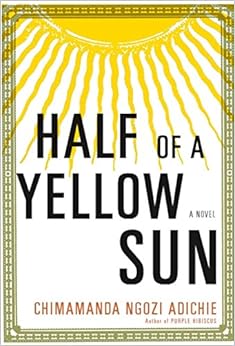
Half of a Yellow Sun, by Chimamanda Ngozi Adichie

Ebook Download Half of a Yellow Sun, by Chimamanda Ngozi Adichie
Half Of A Yellow Sun, By Chimamanda Ngozi Adichie. A work may obligate you to constantly enhance the expertise and also encounter. When you have no enough time to boost it directly, you can get the encounter and understanding from checking out guide. As everyone knows, book Half Of A Yellow Sun, By Chimamanda Ngozi Adichie is very popular as the window to open the world. It implies that reading publication Half Of A Yellow Sun, By Chimamanda Ngozi Adichie will certainly give you a brand-new way to discover everything that you need. As the book that we will certainly provide right here, Half Of A Yellow Sun, By Chimamanda Ngozi Adichie
However, after discovering this website you might not be doubt and also feel difficult any more. It appears that this site uses the most effective collections of the book to read. When you want such subject, Half Of A Yellow Sun, By Chimamanda Ngozi Adichie can be an option. Wow, like this publication so much. Do you really feel the very same? Well, actually, it's not mosting likely to be hard when anticipating this book as the analysis product. After locating the wonderful website as this on the internet collection, we will be so easy in locating several styles of books.
You could not envision how the words will come sentence by sentence as well as bring a publication to check out by everybody. Its allegory as well as diction of the book picked really motivate you to attempt creating a publication. The motivations will certainly go finely and also naturally throughout you read this Half Of A Yellow Sun, By Chimamanda Ngozi Adichie This is one of the effects of how the writer can affect the readers from each word written in the book. So this publication is extremely should check out, also step by step, it will be so beneficial for you and also your life.
When you have decided that this is likewise your preferred book, you have to examine and also obtain Half Of A Yellow Sun, By Chimamanda Ngozi Adichie quicker. Be the first of all individuals as well as accompany them to delight in the info relevant around. To obtain even more referral, we will show you the connect to obtain and also download the book. Also Half Of A Yellow Sun, By Chimamanda Ngozi Adichie that we serve in this site is type of soft file publication; it does not indicate that the content will certainly be reduced. It's still to be the one that will inspire you.
From Publishers Weekly
Starred Review. When the Igbo people of eastern Nigeria seceded in 1967 to form the independent nation of Biafra, a bloody, crippling three-year civil war followed. That period in African history is captured with haunting intimacy in this artful page-turner from Nigerian novelist Adichie (Purple Hibiscus). Adichie tells her profoundly gripping story primarily through the eyes and lives of Ugwu, a 13-year-old peasant houseboy who survives conscription into the raggedy Biafran army, and twin sisters Olanna and Kainene, who are from a wealthy and well-connected family. Tumultuous politics power the plot, and several sections are harrowing, particularly passages depicting the savage butchering of Olanna and Kainene's relatives. But this dramatic, intelligent epic has its lush and sultry side as well: rebellious Olanna is the mistress of Odenigbo, a university professor brimming with anticolonial zeal; business-minded Kainene takes as her lover fair-haired, blue-eyed Richard, a British expatriate come to Nigeria to write a book about Igbo-Ukwu art—and whose relationship with Kainene nearly ruptures when he spends one drunken night with Olanna. This is a transcendent novel of many descriptive triumphs, most notably its depiction of the impact of war's brutalities on peasants and intellectuals alike. It's a searing history lesson in fictional form, intensely evocative and immensely absorbing. (Sept. 15) Copyright © Reed Business Information, a division of Reed Elsevier Inc. All rights reserved.
Read more
From The New Yorker
Based loosely on political events in nineteen-sixties Nigeria, this novel focusses on two wealthy Igbo sisters, Olanna and Kainene, who drift apart as the newly independent nation struggles to remain unified. Olanna falls for an imperious academic whose political convictions mask his personal weaknesses; meanwhile, Kainene becomes involved with a shy, studious British expat. After a series of massacres targeting the Igbo people, the carefully genteel world of the two couples disintegrates. Adichie indicts the outside world for its indifference and probes the arrogance and ignorance that perpetuated the conflict. Yet this is no polemic. The characters and landscape are vividly painted, and details are often used to heartbreaking effect: soldiers, waiting to be armed, clutch sticks carved into the shape of rifles; an Igbo mother, in flight from a massacre, carries her daughter's severed head, the hair lovingly braided. Copyright © 2006 Click here to subscribe to The New Yorker
Read more
See all Editorial Reviews
Product details
Hardcover: 448 pages
Publisher: Alfred A. Knopf; 1st edition (September 12, 2006)
Language: English
ISBN-10: 1400044162
ISBN-13: 978-1400044160
Product Dimensions:
6.6 x 1.4 x 9.5 inches
Shipping Weight: 1.7 pounds (View shipping rates and policies)
Average Customer Review:
4.6 out of 5 stars
1,042 customer reviews
Amazon Best Sellers Rank:
#101,776 in Books (See Top 100 in Books)
I came into Chimamanda Ngozi Adichie’s Half of a Yellow Sun not knowing much about the Biafran conflict. I came out feeling as if I’d just lived through the experience. “Moving†is the most appropriate term for this novel. Adichie doesn’t just write about the failure of a new state trying to gain independence from Nigeria. She doesn’t just write about a couple of love stories during war, or family relationships that took place during war. What she does so masterfully and deliciously is capture the dreams and hopes and vision of Biafra, paint it so clearly that the reader can taste it, and then take it all away slowly, deliberately, painfully… mimicking what those who lived through the conflict probably felt. Her ability to capture the dramatic life-altering experiences of Biafra is astonishing. When I put down the book, I felt as if I’d just experienced the conflict through my own eyes. Essentially, the book is about chronicling the tone and feel of the Biafran conflict. She leaves the reader wanting Biafra, needing Biafra, and feeling remorse for the consequences of its failure (not a spoiler – her plot is carved into history). Nigeria in the 1960s was a society entangled in ethnic troubles and then civil war. The genocide inflicted on the Igbo people is horrible and tragic. Through the war they suffered and starved, eventually bringing Biafra to its knees. This part of her story is one of the most powerful, and where Adichie really flexes her literary muscles. How she is able to have starvation permeate her imagined world, effecting each character and the world around them, is fantastic. How Adichie was able to capture the pain and torment in such a realistic way is beyond me. Her depth of research also becomes apparent here, regularly – but not obnoxiously – dropping in facts and names of organizations and people who were there during the conflict. Adichie’s argument and motive for writing such a work was to chronicle with as much accuracy as possible the tone and feel of that conflict. She leaves the reader wanting Biafra, needing Biafra, and feeling remorse for the consequences of its failure (not a spoiler – her plot is carved into history). I can guarantee you will put down this book and go straight to your computer to research this event. The length of the work is one of the few complaints I have. In Adichie’s obsessive need to create the world of Biafra as realistically for the reader as possible, her details can slow the pacing. This is an emotional novel, and she builds the emotions over time. Also, don’t be expecting to laugh – you barely will. Yet, if you are looking for a work that will move you and your worldview, this is the one. I highly recommend.
Half of a Yellow Sun is historical fiction and a fine-written novel. It concerns the history of Nigeria and the war. The characters are very well developed and very interesting. Adichie is a fabulous writer. The story is never boring and there were some interesting character viewpoints. One point of interest was discovering the anti-Semitism that existed within Nigeria or the outright ignorance of some of Nigeria's citizens. A long Muslim vs Christian war or battle has had a terrible effect on Nigeria. The use of oppressive tactics akin to Hitler's 3rd Reich was used within Nigeria to squelch the Christian intellectual party and its citizens by a brutal regime of ignorant religious extremists who oppress girls and women, and hinder educational systems. This is absolutely a fabulously written account with historical facts that is written with fictionally orientated characters to add dynamic realism and dimensions. Adichi herself, is highly intelligent, brilliant, and a prize writer from Nigeria. The book has over 500 pages, so expect to spend some time digesting the contents and comprehending some of Nigeria's immense history. Adichi is one of your better writers on the market.
HALF OF A YELLOW SUN is a very important and very readable postcolonial novel. Centering on the Nigeria-Biafra War of 1967-70, it has a lot to teach both about postcolonial Nigeria and about the art and import of storytelling.Language is a central concern in this book, including the occasional tongue-in-cheek play on words, such as Richard being (emotionally) "stirred" by a ropework pot. I got the sense that the author was almost deliberately deceptive in the simplicity of her language, covering a much greater facility and more playful attitude to language than is at first apparent. The language used is unsophisticated, which makes the occasional moments of searing insight or incisive statements so much more striking. For example: "He [Richard] laughed. The sound spilt out of him, uncontrolled, and he looked down at the clear, blue pool and thought, blithely, that perhaps that shade of blue was also the colour of hope."The tone and cadence of each chapter matches that of the point-of-view character, despite being written in the third person. There is something characteristically African about Olanna's and Ugwu's chapters, something more straightforward but no less deeply felt, whereas Richard's chapters have a more introverted, tentative, sometimes even wishy-washy feel to them. While the language of the narrative does change in accordance with the age and nature of the current point-of-view character, overall it is endearingly artless - simple but not simplistic, with subtle shades of color to it. Adichie often displays a keenly observational, witty turn of phrase, especially in her descriptions of people. I found this sentence both humorous and evocative: "She began to look more and more like a fruit bat, with her pinched face and cloudy complexion and print dresses that billowed around her body like wings."In general, this book follows the "show, don't tell" method, so that it is unburdened with large chunks of information but is, rather, an intriguing puzzle to be deciphered bit by bit as you read. Each chapter introduces a new character who is within the orbit of the focal character of the previous chapter. In this way, the characters are enabled to comment on and give contrasting perspectives of each other, so that the reader does not have to dogmatically accept a given view of each character but can draw their own conclusions instead. Is Odenigbo a passionate revolutionary or a deluded idealist? Is Olanna sweet and smart or hopelessly naive? Is Kainene a cold fish or a woman of mysterious depths? You decide.There is a definite feeling that the characters in this book are there as conduits through which a larger lesson about Nigerian history is delivered. The characters cover almost every possible viewpoint - there is Odenigbo the "revolutionary lecturer"; Olanna, his sweet, beautiful lover from a privileged family; Ugwu, their houseboy from a very poor family; Kainene, Olanna's cynical businesswoman sister; and Richard, Kainene's white English ex-pat lover, the earnest outsider. The older person's perspective is provided by a host of minor characters. Olanna, Ugwu, and Richard are the three point-of-view characters, which offers the most diverse range of viewpoints. Thus, I very much felt that the characters of HALF OF A YELLOW SUN were vehicles for the plot rather than necessarily being themselves the focus of the story. This is one example of how Olanna's life is inextricable from the war she is trying to survive: "It was the very sense of being inconsequential that pushed her from extreme fear to extreme fury. She had to matter. She would no longer exist limply, waiting to die. Until Biafra won, the vandals would no longer dictate the terms of her life." This is another: "... she felt as if she were about to turn a corner and be flattened by tragedy."If the characters are vehicles for lessons in Nigerian history and politics, they are first-class vehicles. They make these lessons heartfelt and very personal. I will have a hard time forgetting "the second coup," especially thanks to Olanna's experience with it. However, paradoxically, I also often felt a certain detachment from the characters in this book, although this was more pronounced with some than with others. Ugwu was the easiest to feel affection for, and, to an extent, Olanna; but Odenigbo remained quite inscrutable throughout for me, followed closely by Kainene. I found it to be a real shame that these so potentially complex characters were not developed much more fully. It was odd to feel a sense of detachment from the characters yet at the same time recognize how often the narrative provided exceptionally astute insights into human nature. For example, at one point when Olanna is considering Odenigbo: "Then she wished, more rationally, that she could love him without needing him. Need gave him power without his trying; need was the choicelessness she often felt around him."Perhaps overshadowed by the meta-narrative about Biafra and by the romantic tales woven through it is the fact that this is also very much a story about sisters - how much they share, how much they are willing to forgive, how strong their bond is: "'There are some things that are so unforgivable that they make other things easily forgivable,' Kainene said."Something I was not expecting was for this book to be funny, but the wry observations of Ugwu's childish perspective provide plenty of levity. For example: "'He's one of these village houseboys,' one of the men said dismissively, and Ugwu looked at the man's face and murmured a curse about acute diarrhoea following him and all of his offspring for life."For the white, Western reader, HALF OF A YELLOW SUN is a gentle but persistent reminder that theirs is not the only valid point of view, that there is a whole other world out there full of very different but equally important cultures and perspectives. This is gently introduced by Ugwu's careful and often awestruck exploration of his new home, which is extremely vivid, providing a sense of newfound wonder at the "mod cons" we take for granted every day. One of the more humbling realizations for the Western reader of HALF OF A YELLOW SUN is just how much African cultures have to teach about family, community, generosity, and hospitality. This book is also enough to make those of us who only speak one language ashamed of our arrogance! HALF OF A YELLOW SUN is rich with non-English phrases and allusions to the many languages of Africa. Again, Ugwu provides a most evocative example: "Master's Igbo felt feathery in Ugwu's ears. It was Igbo coloured by the sliding sounds of English, the Igbo of one who spoke English often."There is a lot of information about Nigerian history and politics in this book, but it is quite easily digestible because it is presented in such diverse ways - from informal academic debates to conversations between lovers to the outline of a book. Discussing such issues with friends and colleagues in his home, Odenigbo says: "'... the only authentic identity for the African is the tribe ... I am Nigerian because a white man created Nigeria and gave me that identity. I am black because the white man constructed black to be as different as possible from his white. But I was Igbo before the white man came.'" In the most basic terms, the politics of the book center on tensions between three groups: the Igbo, the Muslims, and the "marauding Europeans."After all of the horror stories we in the West have heard about Biafra, it is refreshing to be reminded by HALF OF A YELLOW SUN (whose title refers to the central symbol on the Biafran flag) that the country's secession from Nigeria began as an act of great hope. At one point, Olanna explains the significance of their new flag to a class of children: "... she unfurled Odenigbo's cloth flag and told them what the symbols meant. Red was the blood of the siblings massacred in the North, black was for mourning them, green was for the prosperity Biafra would have, and, finally, the half of a yellow sun stood for the glorious future."The dramas of the characters' personal lives are punctuated throughout by historical and political triumphs and disasters. Seeing the profound effects of these events on the characters in the book just highlights the fact that real Nigerians' or Biafrans' lives would have followed a similar course, with little distinction between the public and the private. The following remark is a chilling affirmation of how many lives were affected by the war: "'The foreigners said that one million died,' Madu said. 'That can't be ... It can't be just one million.'"In this stridently postcolonial book, Adichie uses the character of Richard to assert quite vigorously that only African people have the right and the ability to tell African stories well. I was slightly affronted by this. I do agree and appreciate that African people will most often be the best at telling the stories of their people - at one point, Kainene says to Richard in this context: "'And it's wrong of you to think that love leaves room for nothing else. It's possible to love something and still condescend to it'" - but I dispute the inference that this is ALWAYS the case, without exception. (I would cite Barbara Kingsolver's THE POISONWOOD BIBLE as one such exception.) At the beginning of the feminist movement, the best women's literature was written by women - but there were exceptions, and they were important. There were some male authors who possessed the necessary respect, understanding, and skills to tell women's stories, and this is much more common today (an excellent recent example being Michel Faber's THE CRIMSON PETAL AND THE WHITE). Perhaps Adichie considers post-colonial literature to be more raw and relevant today than feminist literature? That is just a question that occurs to me, I don't mean to put words into her mouth. However, I do wonder if her attitude to African literature is a little too divisive and exclusionary. Still, there is no denying the outsider's question: "How much did one know of the true feelings of those who did not have a voice?"HALF OF A YELLOW SUN gives a lilting but powerful voice to those who experienced the creation and collapse of Biafra, as well as to all the color, vigor, passion, gentleness, idealism, and community of Nigerians and Biafrans in the latter twentieth century. I would gladly recommend this book to anyone who wants an engaging story to teach them about a different time and a different culture.
Half of a Yellow Sun, by Chimamanda Ngozi Adichie PDF
Half of a Yellow Sun, by Chimamanda Ngozi Adichie EPub
Half of a Yellow Sun, by Chimamanda Ngozi Adichie Doc
Half of a Yellow Sun, by Chimamanda Ngozi Adichie iBooks
Half of a Yellow Sun, by Chimamanda Ngozi Adichie rtf
Half of a Yellow Sun, by Chimamanda Ngozi Adichie Mobipocket
Half of a Yellow Sun, by Chimamanda Ngozi Adichie Kindle

Tidak ada komentar:
Posting Komentar